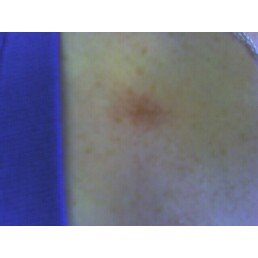
Been having a bunch of medical tests recently. In the most recent one, a stress test, the technician scuffed me so the monitors would stick. He used the medical version of a Brillo Pad, telling me that I'd be able to understand how my pots feel. I would imagine that a little rubbing is nothing compared to the extreme heat they're used to, but who am I to argue with the feelings of cookware?
My scuffing hurts, but not horribly. Most of the marks have faded, but this one continues to plague me. Of course, it's smack dab in the center of my chest.
Showing posts with label health. Show all posts
08 June 2007
06 January 2007
File: Book Review
Book: YOU: On a Diet
Authors: Dr. Mike Roisen and Dr. Mehmet Oz
Publisher: Free Press
Pages: 384
Version: Hardcover
Release: October, 2006
Matt and I watched a special on 20/20 talking about the brain and weight loss. It used fear for one team (their overweight bikini pictures shown on the baseball stadium's big screen if they didn't hit their goal) and praise for the second (positive reinforcement team approach).
We liked this idea of a challenge, as we both are not completely satisfied with our bodies (who knew that driving added pounds and flab?). We're still young and optimistic -- our goal is that in two months our waistlines/eating and fitness habits will change for the better. If not, there is a two-week moratorium on driving the car.
Knowing we needed guidance, I went to the bookstore. The You book was exactly what I wanted. I was familiar with the other You titles (YOU: The Owner's Manual and YOU: The Smart Patient) because I had checked them out of the library. They immediately became books I wanted to own (and write in).
The series is written by doctors who believe that if we know about our biology, we can retrain ourselves to avoid some of the largest health problems in our society: heart disease/attacks, diabetes, obesity, etc. So, they go to great lengths to make the content easy to digest (bad pun intended) and fun to read.
I think they go a little overboard in this respect. There are all of these "Youreka" tips that let you know when they've hit upon the gold nugget idea. While the tips are helpful, the shout-out is annoying. The drawings are clear, but cutesy in a charming way. For example, it's kind of fun to imagine little elves with spackle running around in your arteries trying to deal with the bad kind of cholesterol.
The authors also do a good job painting word pictures. According to them, the omentum, which is your body's parking lot for fat, looks like a pair of stockings hanging off of the stomach. As you gain more fat, the omentum continues to grow, pushing aside your other organs (and your waist line) while grabbing up all of the glucose, which your brain and other parts need to function. This is why the beer belly is especially unhealthy.
The book is just comprehensive enough to allow me to explain what the omentum is and does without being so comprehensive that I felt overwhelmed. It is logically laid out, leading you through the biology of food vs. your body to the emotional aspects behind why we eat (and why diets fail). Then, it explains what you can do to change your eating and exercise habits.
The exercise is a good addition. The premise is that, no excuses, you walk for thirty minutes a day, every day. You can break it up into three ten-minute segments, but you must do it. Once you conquer that, you can go on to additional strength and cardiovascular exercise that is supposed to help work and tone your muscles.
Part of the program is that you dump your cabinets of everything bad for you. We did this. I was surprised to see how many foods have high fructose corn syrup (a big no-no because your body uses it quickly and then sends messages to the brain that you need to eat again, even if you're not hungry).
The book also includes information on how to eat, instructions for the first two weeks, and a shopping list and menu with recipes. The shopping list is a bit difficult. What grocery store carries 100% whole wheat pizza dough? Also, there are some items that weren't listed (ground turkey is needed for one of the recipes, but you're never told to buy it).
The promise is that once you learn how to eat, you will retrain your body to want exercise and good foods and leave cravings behind you like yesterday's socks. I'm not sure if this is true or not, but the book was well-written, the doctors were likable, and the plan felt so doable and authoritative, that I'm willing to give it a try.
If it does work, I'll buy this book for everyone I know. If it doesn't, it was a good read anyway.
Authors: Dr. Mike Roisen and Dr. Mehmet Oz
Publisher: Free Press
Pages: 384
Version: Hardcover
Release: October, 2006
Matt and I watched a special on 20/20 talking about the brain and weight loss. It used fear for one team (their overweight bikini pictures shown on the baseball stadium's big screen if they didn't hit their goal) and praise for the second (positive reinforcement team approach).
We liked this idea of a challenge, as we both are not completely satisfied with our bodies (who knew that driving added pounds and flab?). We're still young and optimistic -- our goal is that in two months our waistlines/eating and fitness habits will change for the better. If not, there is a two-week moratorium on driving the car.
Knowing we needed guidance, I went to the bookstore. The You book was exactly what I wanted. I was familiar with the other You titles (YOU: The Owner's Manual and YOU: The Smart Patient) because I had checked them out of the library. They immediately became books I wanted to own (and write in).
The series is written by doctors who believe that if we know about our biology, we can retrain ourselves to avoid some of the largest health problems in our society: heart disease/attacks, diabetes, obesity, etc. So, they go to great lengths to make the content easy to digest (bad pun intended) and fun to read.
I think they go a little overboard in this respect. There are all of these "Youreka" tips that let you know when they've hit upon the gold nugget idea. While the tips are helpful, the shout-out is annoying. The drawings are clear, but cutesy in a charming way. For example, it's kind of fun to imagine little elves with spackle running around in your arteries trying to deal with the bad kind of cholesterol.
The authors also do a good job painting word pictures. According to them, the omentum, which is your body's parking lot for fat, looks like a pair of stockings hanging off of the stomach. As you gain more fat, the omentum continues to grow, pushing aside your other organs (and your waist line) while grabbing up all of the glucose, which your brain and other parts need to function. This is why the beer belly is especially unhealthy.
The book is just comprehensive enough to allow me to explain what the omentum is and does without being so comprehensive that I felt overwhelmed. It is logically laid out, leading you through the biology of food vs. your body to the emotional aspects behind why we eat (and why diets fail). Then, it explains what you can do to change your eating and exercise habits.
The exercise is a good addition. The premise is that, no excuses, you walk for thirty minutes a day, every day. You can break it up into three ten-minute segments, but you must do it. Once you conquer that, you can go on to additional strength and cardiovascular exercise that is supposed to help work and tone your muscles.
Part of the program is that you dump your cabinets of everything bad for you. We did this. I was surprised to see how many foods have high fructose corn syrup (a big no-no because your body uses it quickly and then sends messages to the brain that you need to eat again, even if you're not hungry).
The book also includes information on how to eat, instructions for the first two weeks, and a shopping list and menu with recipes. The shopping list is a bit difficult. What grocery store carries 100% whole wheat pizza dough? Also, there are some items that weren't listed (ground turkey is needed for one of the recipes, but you're never told to buy it).
The promise is that once you learn how to eat, you will retrain your body to want exercise and good foods and leave cravings behind you like yesterday's socks. I'm not sure if this is true or not, but the book was well-written, the doctors were likable, and the plan felt so doable and authoritative, that I'm willing to give it a try.
If it does work, I'll buy this book for everyone I know. If it doesn't, it was a good read anyway.
Subscribe to:
Posts (Atom)
